
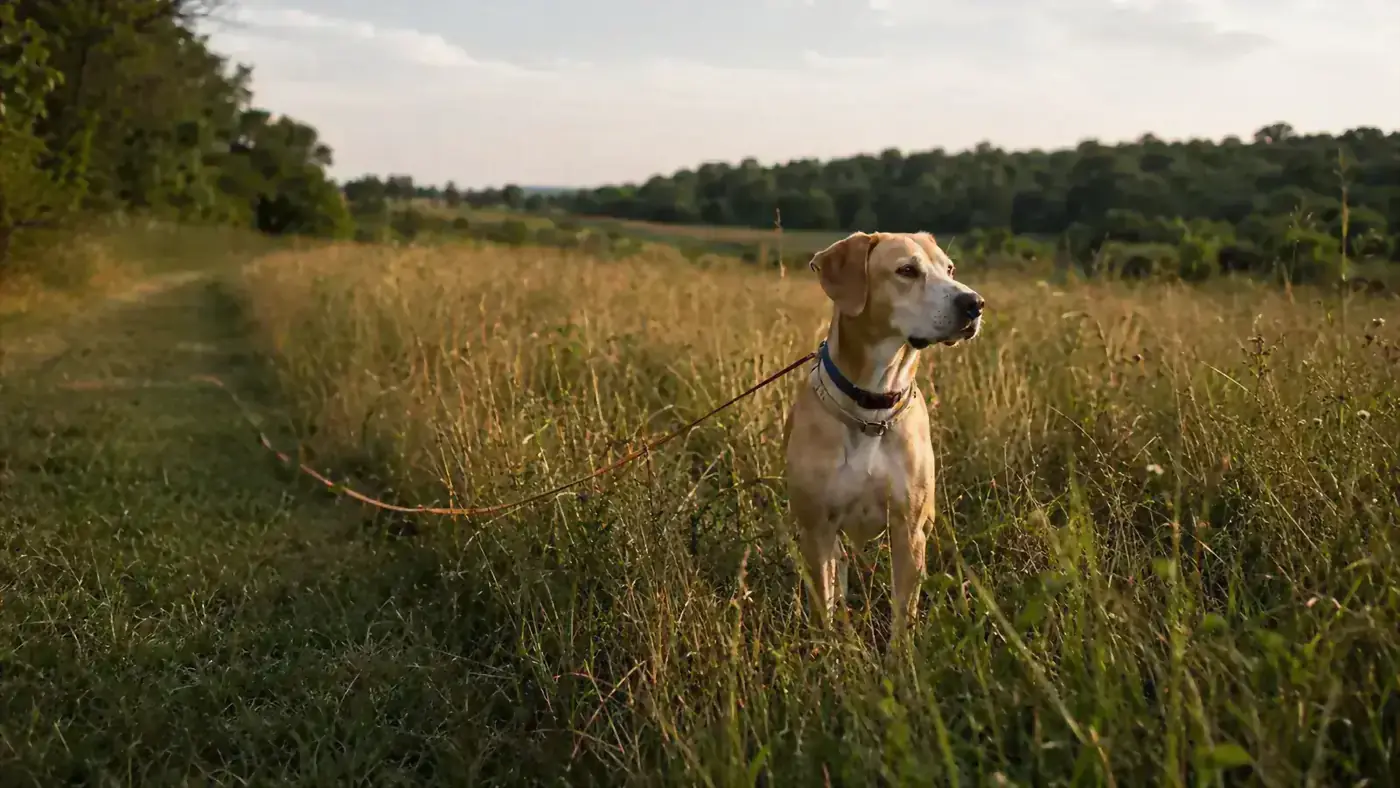
I bought the Hi Kiss long line because Ruggles, my seven-year-old Lab and hound mix, has a nose that overrides every ounce of training I have ever managed to put into him. A rabbit crosses the fence line and he is gone, and no amount of me hollering his name into the treeline does a bit of good. The line seemed like the obvious answer. Give him distance to be a hound, keep a hand on the other end, and slowly build the recall that walks off leash were never going to teach him on their own.
What nobody told me before I clipped it on for the first time was how much the Hi Kiss line was going to cost me in tangled knots, one good rope burn across my palm, and a fair amount of muttering while I picked burrs and mud out of thirty feet of nylon at the end of a long evening. This is not a review that pretends none of that happened. It happened constantly, for a full season, spring through early fall, and I still have opinions worth sharing about whether it was worth it.
The Quick Verdict
The Hi Kiss line genuinely helped with recall, but it tangles more than any product page will admit, and it demands respect for your hands and a real plan for your dog.
Amazon Check Today's Price →Before you order thirty feet of rope, know what you're actually signing up for
Check today's price and length options on Amazon, and read the rest of this review before you decide which length fits your fields and your patience.
Amazon Check Today's Price on Amazon →How I've Used It
I ran the Hi Kiss line on Ruggles for one full season, starting in spring and going through early fall, which is enough time to see it in dew-soaked grass, dry summer dirt, and the first cold, wet mornings of the year turning over. That is the timeline this whole review is built on. Not a single good afternoon on a dry trail. A full season of actual weather and actual use, which is exactly the kind of stretch where a cheap piece of gear either proves itself or falls apart in your hands.
The routine was simple on paper. Clip the Hi Kiss line to Ruggles's harness, not his collar, and let him range out across the back half-acre or into the field behind the treeline while I stood somewhere in the middle holding the coil. Every session ended the same way regardless of how the training itself went, with me spending five to ten minutes untangling loops of line that had wrapped around his legs, a fence post, or my own boots at some point during the walk.
I want to be clear that the line did what it was supposed to do on the training side. Ruggles's recall got better over the season, not perfect, but noticeably better, and I go into that progress in more detail in the long-term review if that is the part you care about most. This piece is about everything that happened in between the training wins, because that is the part almost nobody writes down honestly.
The Tangling Problem Nobody Warns You About
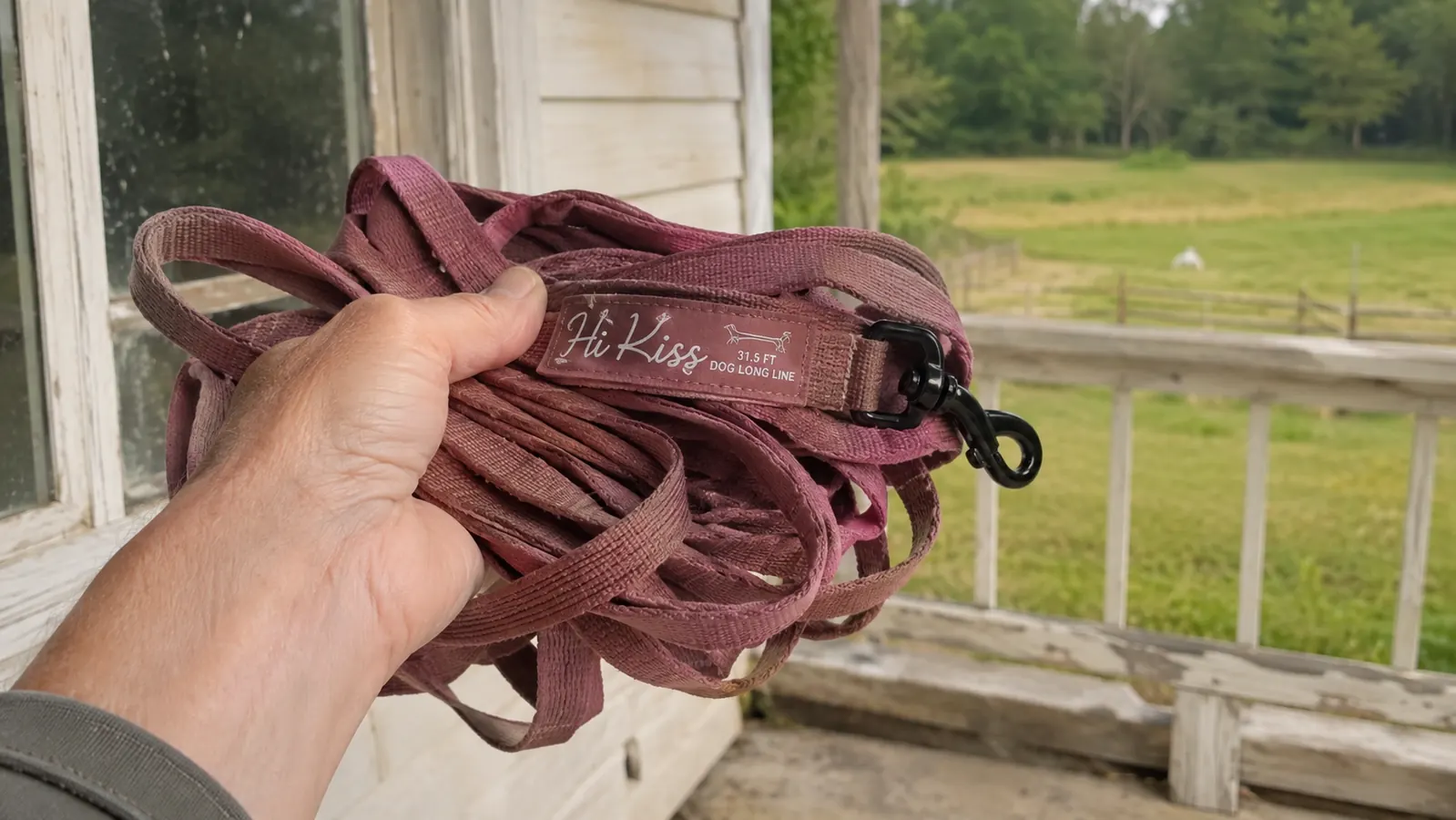
Here is the first honest thing I have to say about the Hi Kiss line: it tangles constantly, and it tangles worst exactly where you need it to run smooth, which is in brush and tall grass. Every session in the field behind our house, the line snagged on goldenrod stalks, wrapped itself around a fence post Ruggles cut too close to, or looped back on itself when he doubled back toward me at a dead run. A thin nylon line moving fast through vegetation just does not stay straight, no matter how careful you are about feeding it out.
The worst version of this happened when Ruggles circled a low shrub while chasing a scent, and the line wrapped twice around his back legs before I could react. He stumbled, caught himself, and was fine, but that moment is exactly why I do not let him range at full speed in thick brush anymore without watching the line's path the entire time, not just the dog. A long line is not something you can clip on and then check your phone for thirty seconds. It needs your eyes on it as much as on your dog.
By the middle of the season I had a system for reducing the tangles, mostly, coiling the line in big loose figure-eights instead of a tight circle, and keeping Ruggles on shorter runs through the thickest brush near the treeline. It cut the tangling down but never eliminated it. If you are picturing a smooth, effortless line paying out behind a happily trotting dog, adjust that picture. Picture knots. Picture kneeling in wet grass working a loop loose while your dog waits, mildly annoyed, a few feet away.
My Hands Learned the Hard Way
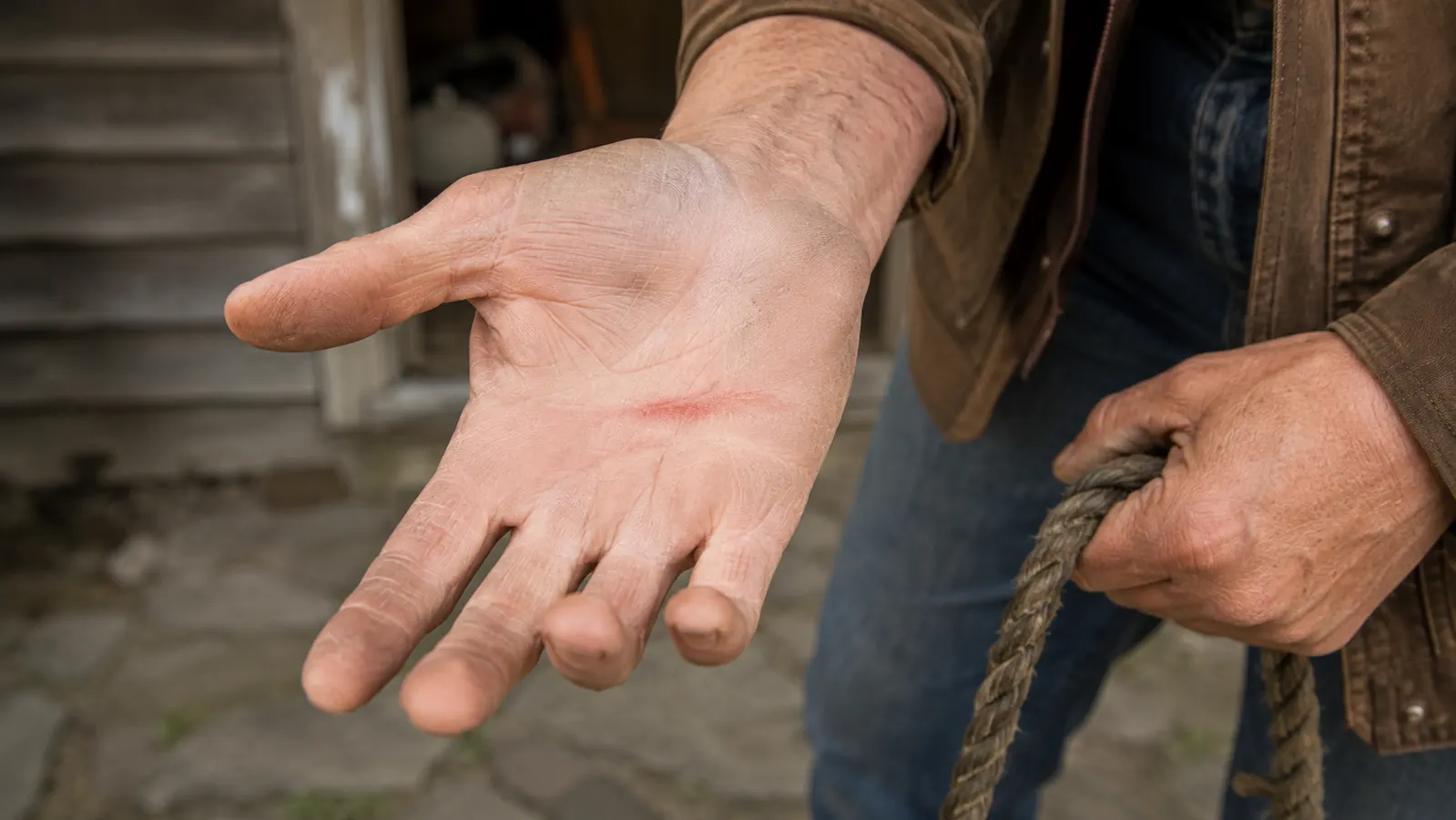
The second thing nobody mentions clearly enough is rope burn, and I found this out the hard way early in the season when Ruggles spotted a rabbit and hit the end of his range at a full sprint while the line was still sliding through my bare hand. It ripped across my palm fast enough to leave a red welt that stung for two days. That was entirely my own mistake, I was not wearing gloves and I was not braced for a hard hit, but it is exactly the kind of mistake a first-time long line owner is likely to make too, because nothing about the product warns you it can happen.
After that I started wearing a pair of light gardening gloves whenever Ruggles was working the Hi Kiss line at any real distance, and I stopped letting the line run loose through an open palm. I wrap a couple of turns around my hand instead, or I let it run through a closed fist rather than an open one, so a sudden hard pull has something to grip against instead of just skin. It is a small habit change, but it matters, and it is the kind of thing a first-timer only learns after the line has already burned them once.
If your dog hits the end of a long line the way a lot of dogs do, all at once and at full speed, plan on gloves from day one, not after the fact like I did. A thirty-foot line moving at a dog's top sprint generates more friction than people expect from something that looks like a simple length of rope.
It Gets Heavy, and That Matters More Than You'd Think
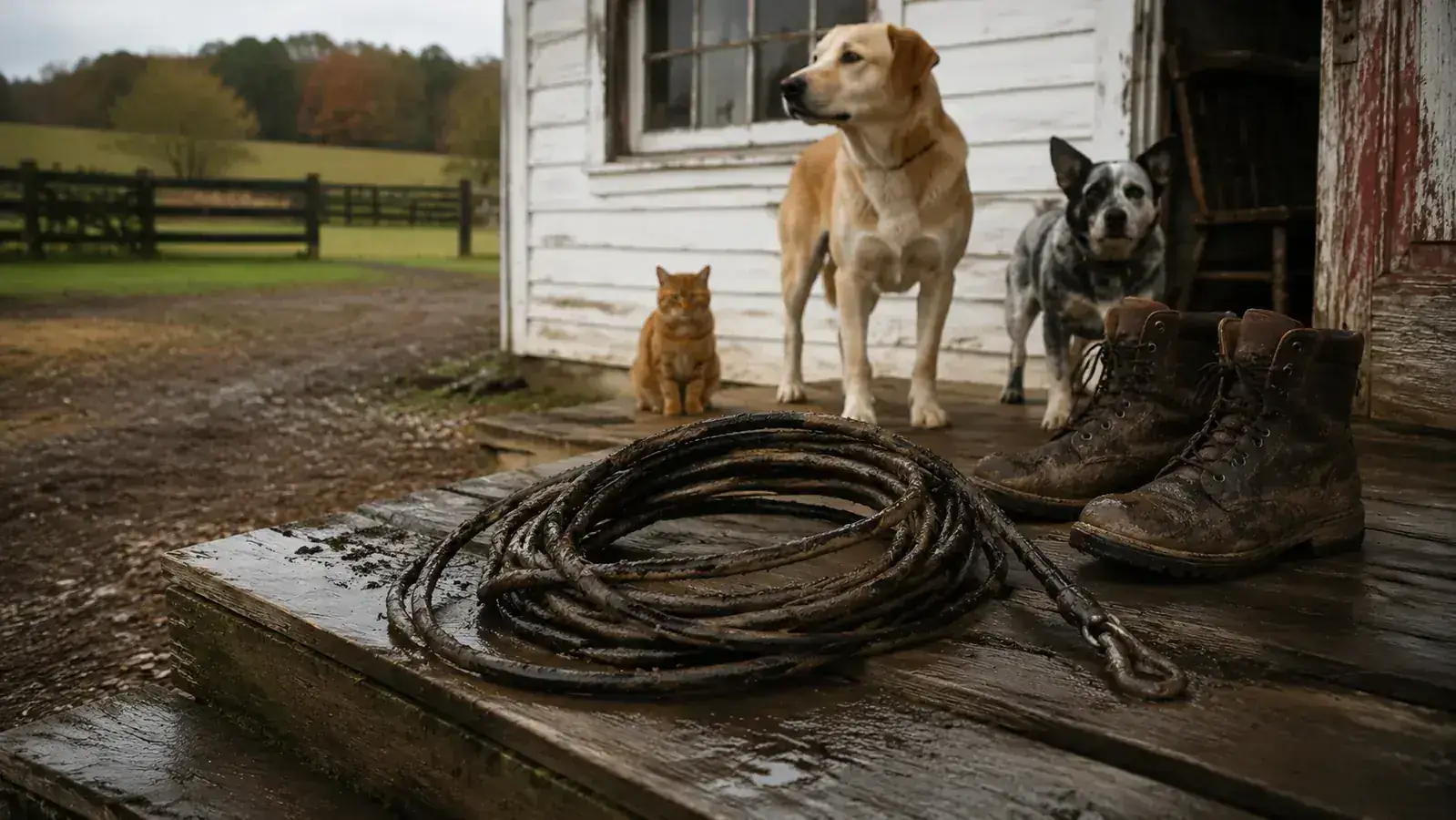
The nylon on the Hi Kiss line soaks up water like a sponge, and once it is wet it stays wet for the rest of the walk. Morning dew on the grass was enough to leave the whole length damp within the first five minutes of a session, and after a real rain, dragging thirty feet of soaked, mud-streaked line back to the house felt like hauling a small anchor. Ruggles did not seem to mind the extra weight much, but I noticed it every single time I coiled the thing up afterward.
Mud made it worse in a way I had not anticipated. Our back field turns soft after a storm, and a wet line dragging through soft mud picks up enough of it that by the end of a session the whole line is noticeably heavier and considerably dirtier than when we started. I got in the habit of rinsing it off with the garden hose and hanging it over the porch railing to dry before the next use, because coiling a muddy wet line straight into a bag by the door is a good way to end up with mildew and a smell that does not wash out easily.
None of this ruins the line for its intended purpose, but it is one more real-world cost to plan around. If you live somewhere dry with short grass and no real mud season, you will barely notice this part. If your yard looks anything like our back field in spring, budget a few extra minutes after every walk for drying it out properly.
It Is Not a Tie-Out, and Treating It Like One Is How Dogs Get Hurt
I need to say this plainly because I almost made the mistake myself early on. One evening I was mid-chore and thought about just clipping the Hi Kiss line to the porch post and letting Ruggles range on his own while I finished up, the same way you would use an actual tie-out stake. I stopped myself before I did it, and I am glad I did, because a training long line is not built or rated for that kind of unsupervised, unattended use the way a purpose-built tie-out is.
The clip hardware and the stitching on a line like this are made for a person holding the other end and managing tension actively, not for a dog hitting the full length of it unsupervised at a dead run against a fixed anchor point. A dog left alone on a line like this can tangle around a post, a shrub, or their own legs with nobody there to untangle them, and a sudden hard hit against a fixed point puts stress on hardware that was never rated for that kind of repeated shock loading. If you want something to stake your dog out safely while you are not holding the other end, buy an actual tie-out made for that job. Do not repurpose the Hi Kiss line for it, no matter how tempting it is on a busy evening.
The Line Doesn't Train the Dog, You Do
The single biggest thing I would tell anyone before they buy this is that the Hi Kiss line by itself does nothing for recall. It is just thirty to fifty feet of nylon with a clip on the end. All it does is give you a way to let a dog range farther while still holding a physical connection to them. Whether that turns into better recall depends entirely on whether you actually run a consistent training plan while you are holding it, calling the dog, rewarding the return, working distance up gradually, rather than just letting them drag it around the yard while you stand there scrolling your phone.
I made this mistake myself the first couple of weeks, clipping the line on and treating it like a longer leash for a walk rather than a training tool with an actual purpose. Nothing improved during those weeks, because nothing about my behavior had changed, only the length of rope between us. It was not until I started deliberately practicing recalls, calling Ruggles from increasing distances and rewarding every single return with something he actually cared about, that the line started earning its keep. If you want the specifics of what that actually looked like session by session, I laid it out in a separate piece on the training itself, because it deserves more room than a paragraph here.
So if you are hoping a long line is a shortcut around doing the actual work of recall training, this is not that product, and no long line from any brand is going to be that product. It is a tool that makes the training possible at greater distances. It is not a substitute for showing up and doing the repetitions.
What I Liked
- Genuinely useful for building real off-leash distance into recall training when paired with an actual plan
- Clip held up through a full season of hard sprints and sudden stops without failing
- Gave Ruggles room to be a hound while I kept a physical connection to him
- Affordable enough to treat as a training expense rather than a major purchase
Where It Falls Short
- Tangles constantly in brush, tall grass, and around legs, especially at higher speeds
- Bare-hand rope burn is a real risk if the dog hits the end of the line hard and fast
- Nylon soaks up water and mud and gets noticeably heavier and dirtier by the end of a wet session
- Not built or rated to be used as an unattended tie-out, despite how tempting that shortcut is
- Does nothing on its own without a consistent recall training plan behind it
A long line does not train your dog. It just gives you more rope to work with while you do the actual training yourself, tangles and rope burn included.
Who This Is For
The Hi Kiss line makes sense for someone with a dog like Ruggles, one with a real recall problem and enough field or yard space to actually use thirty or more feet of line, who is willing to run a consistent training plan rather than treating the line as a set-it-and-forget-it fix. It also helps to have a bit of patience for the maintenance side, the untangling, the rinsing off after a muddy session, the occasional glove-wearing precaution. If that sounds like your situation, read how the training progress actually looked over the full season before you decide on a length.
Who Should Skip It
Skip it if you are hoping for a hands-off solution, something to clip on and walk away from while you get other chores done, because that is exactly the tie-out mistake that can get a dog hurt. Skip it if you do not have realistic space to let a dog range out that far without hitting a road, a neighbor's property, or thick brush that will tangle the line constantly. And skip it, or at least go in with better expectations, if you are not willing to actually run recall drills while holding the other end. Without that part, you are just dragging an expensive piece of wet rope around your yard for no real gain.
Tangles and all, it earns its spot if you're ready to do the actual training
Check today's price and length options on Amazon, and go in knowing the gloves, the mud, and the untangling are part of the deal.
Amazon Check Today's Price on Amazon →